it
it
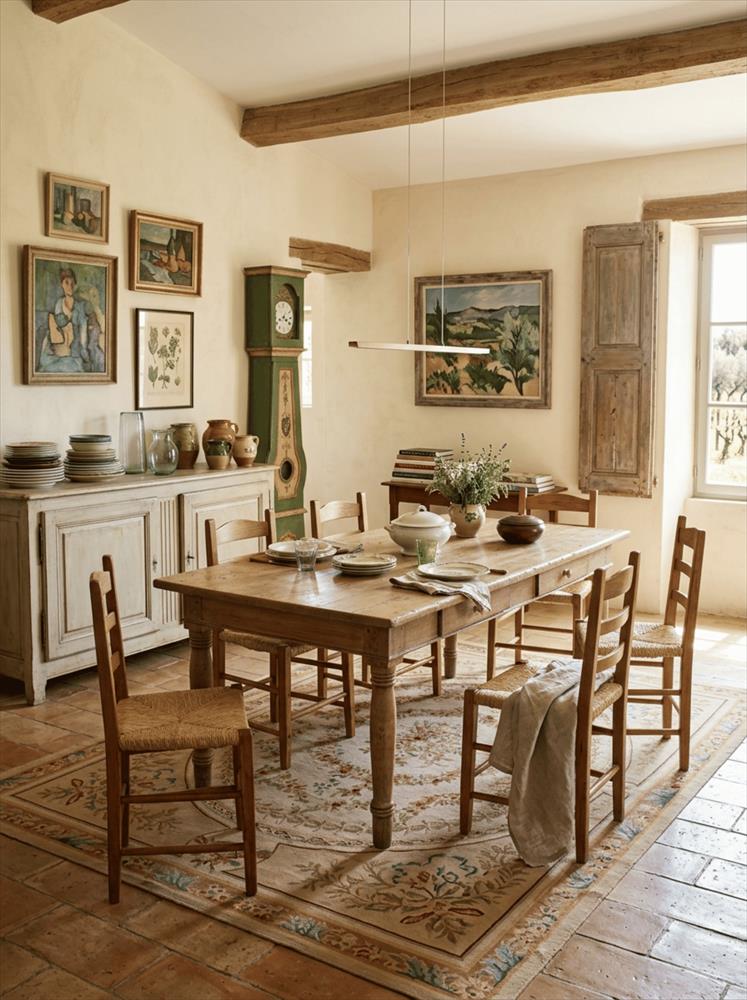
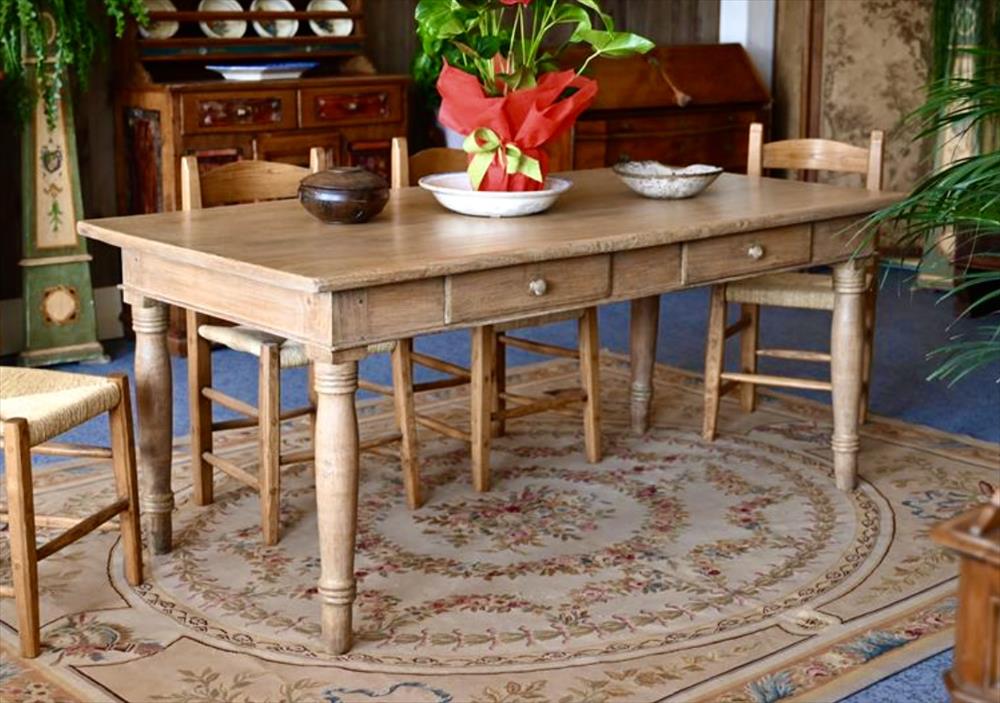
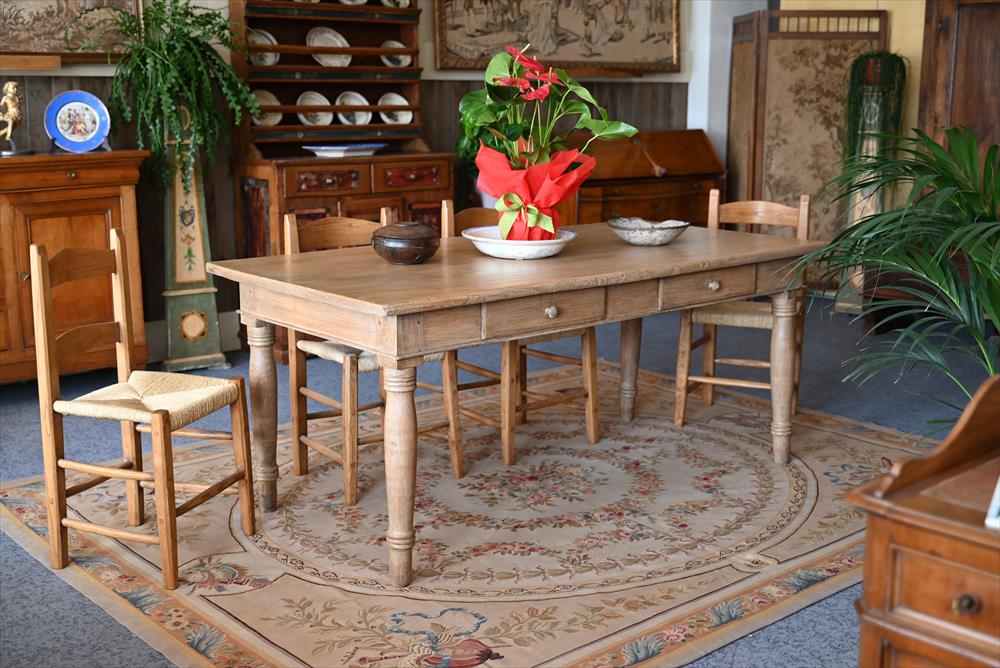
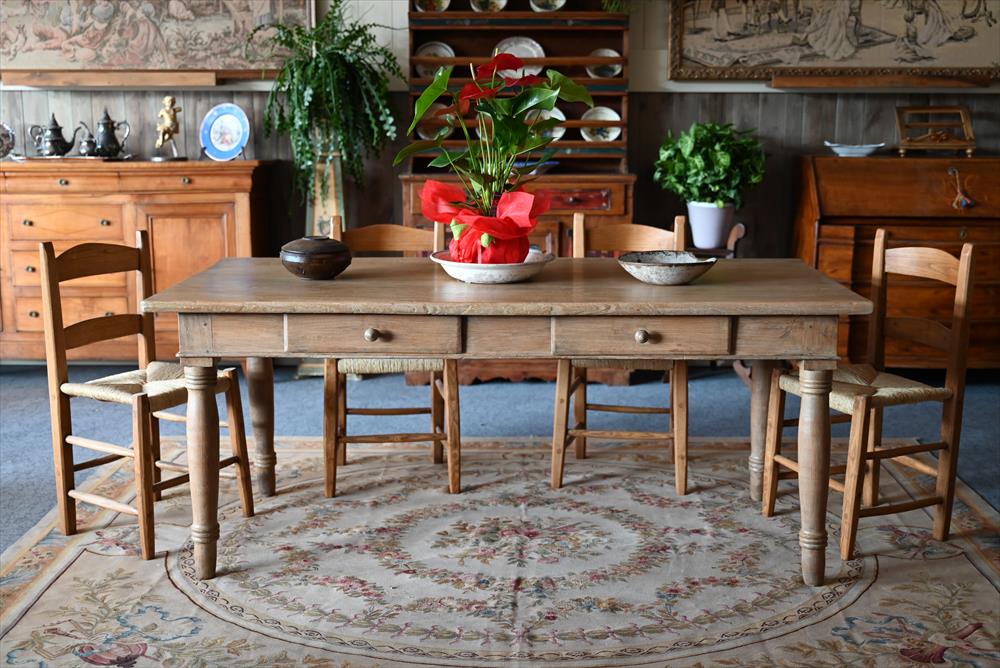
A country table in elm, made to work and to last, with a surface that shows time without hiding it.
A country table, but not a common one.
Rustic, but with a balance that makes it naturally elegant.
Solid elm — you can tell from how it has held up.
It is a hard, compact wood, well chosen and worked with care. There is no saving on material here: the thickness is right, the structure is solid, built to withstand continuous use, without too many precautions.
It comes from the Chianti area, in the early 19th century, from houses where the table was not only used for meals. It was a working surface, a place to prepare, to rest things on — always in use.
It is a piece of good, honest joinery. Nothing decorative for its own sake, just made as it should be: correct proportions, stable structure, firmly set legs. Even the legroom is comfortable — which is not a given in tables of this kind.
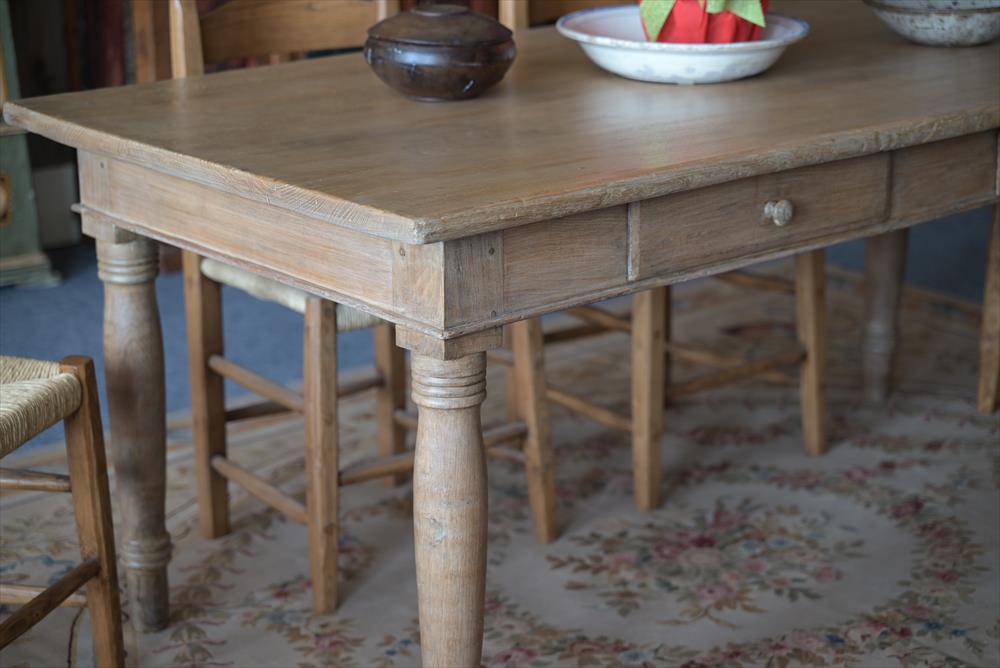
The turned legs clearly place it in its time.
They are not yet the fuller, “bottle-shaped” forms of the Louis Philippe period, but neither are they the more restrained Empire shapes: the rings in the upper section point to that transition, around 1820–1830.
The top is the most telling part: wide, of good thickness, with visible but controlled wear.
It has been used, not worn out.
The patina is faded, irregular, and for that very reason interesting: it does not even out the surface, it does not hide — it shows time.
Along the long side, there are two deep drawers.
They work, and you can tell they have been used. They are not an addition — they belong to the table.
The restoration has been minimal: structural consolidation, cleaning, and a light protective finish. No reconstruction.
The table is original, sound, and free from woodworm.
Used, but well kept.
It is not a common piece.
Across much of Tuscany, country tables were often made economically, using softer woods. This is something else: likely from a sharecropper’s house, where the table had to last.
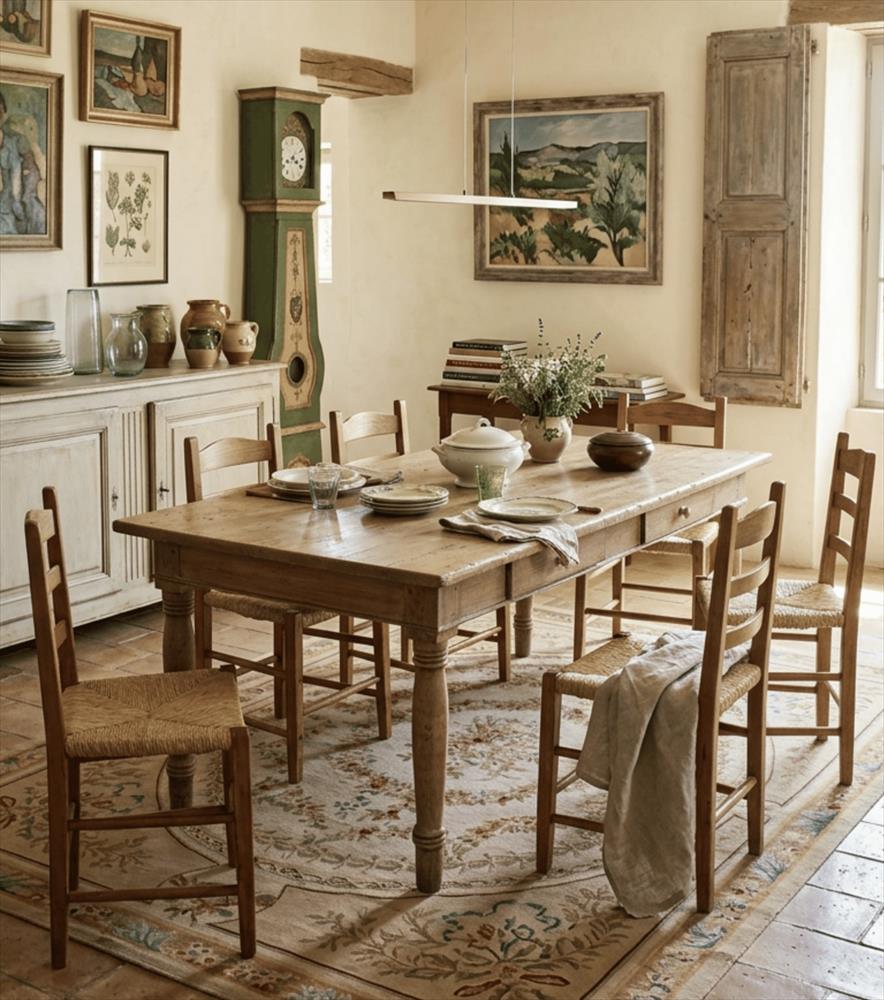
Today it fits easily into a contemporary space.
As a dining table, but also as a working surface. The top can be used without too many concerns.
This is not a table to be fixed or staged.
It is a table ready to be placed at the center.
They have survived time, earning the right to remain.
They carry memory and truth.
Our work is to recognize them and allow them to continue.
- Material: solid chestnut wood
- Size: cm 190 x 92 x 80 h.
- Condition: Restored
- Period: Early 19th
- Style: Charles X
- State: Optimal conditions