it
it
Nobility and Church: Two Faces of Power in 17th-Century Florence
Pair of Portraits, Florentine School, Second Half of the 17th Century
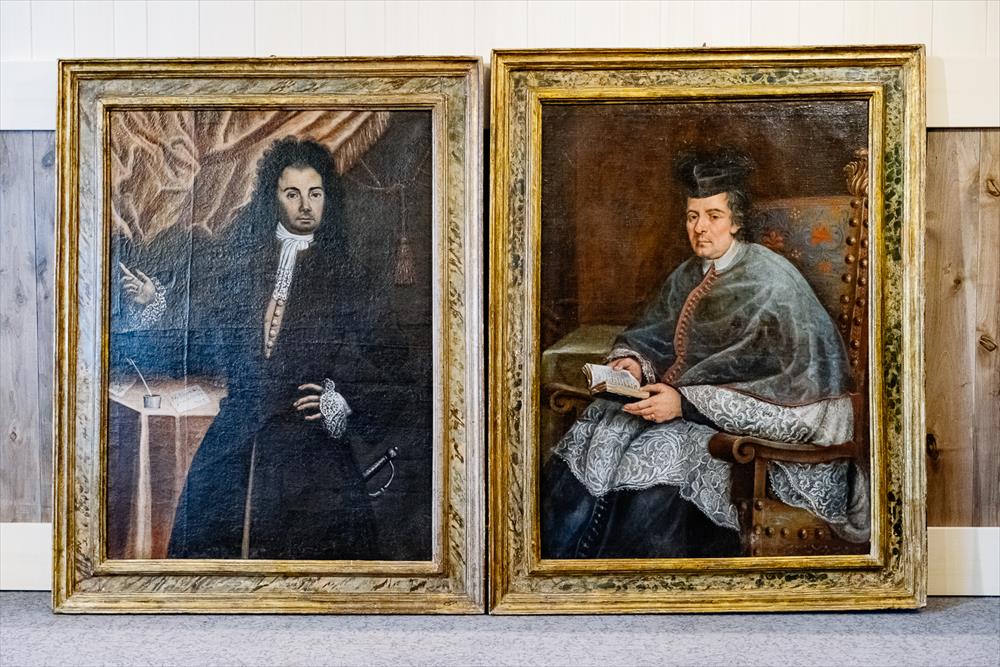
Pair of oil-on-canvas portraits, conceived as pendants, attributable to the Florentine school of the second half of the seventeenth century, displaying clear affinities with portraiture associated with the Medici court.
The two paintings were conceived as a pair and are meant to be viewed together. They are not simply portraits, but carefully constructed images intended to define status, authority and social position.
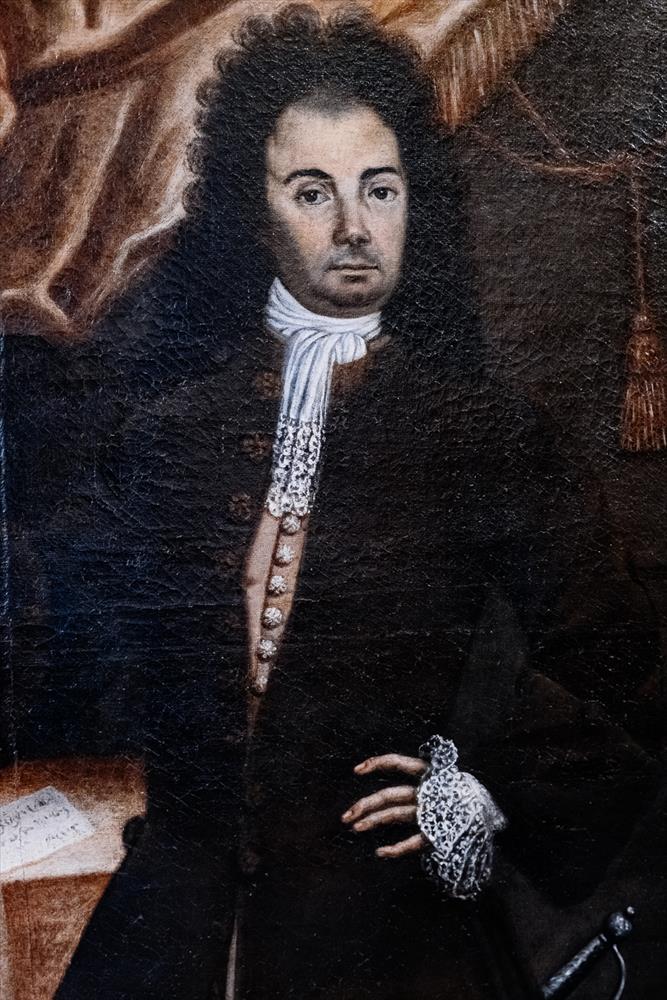
In the first painting, the nobleman is depicted standing, dressed in dark court attire and wearing a full wig. His hand rests on a table beside an open letter and an inkwell—symbols of responsibility, administration and worldly affairs. The sword and his composed stance further affirm his rank.
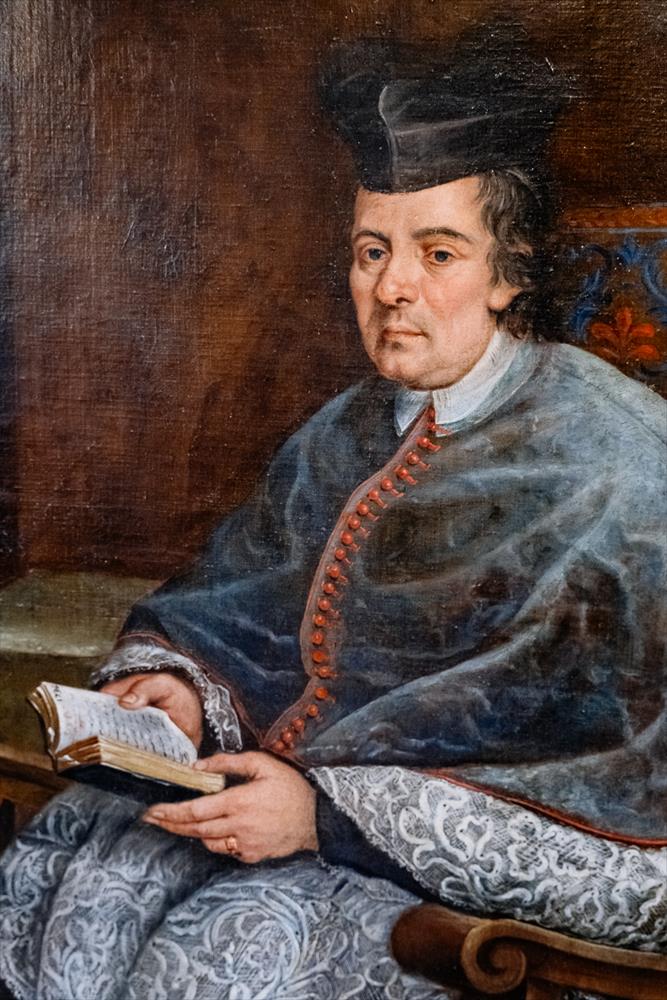
In the companion portrait, the prelate is seated in a more reserved pose. Richly dressed in ecclesiastical robes, he holds an open book, an unmistakable reference to religious authority and learning.
Viewed together, the contrast is immediate: on one side, secular power; on the other, ecclesiastical authority. Two distinct yet closely connected spheres, reflecting the social structure of seventeenth-century Florence.
The quality of execution is evident throughout. Lace, embroidery and luxurious fabrics are rendered with remarkable care, particularly in the sleeves, collars and richly textured garments. These details are not mere decoration; they are an essential part of the visual language through which status and identity are expressed.
The faces are composed and restrained, free from unnecessary theatricality. Their direct yet measured expressions are characteristic of Florentine portraiture of the period and closely recall the tradition established by Justus Sustermans.
The format itself also plays an important role. Their generous dimensions suggest that they were intended for rooms of representation, where portraits served not simply as decoration but as statements of presence and authority.
Condition
Both paintings are structurally sound and in very good overall condition. A light surface cleaning would further enhance their readability.
The original frames, well preserved and decorated with gilding and faux-marble lacquer, are consistent with the taste of late seventeenth-century Tuscany and complete the ensemble beautifully.
Taken as a whole, this is a pair conceived to be seen together.
Two composed, unequivocal images.
They do not invite interpretation.
They define.
- Material: Oil on canvas
- Size: 122 x 157 h cm
- Condition: Tobe restored
- Period: Late 17th century /Early 18th century
- State: Good conditions