it
it
Real matter, controlled light
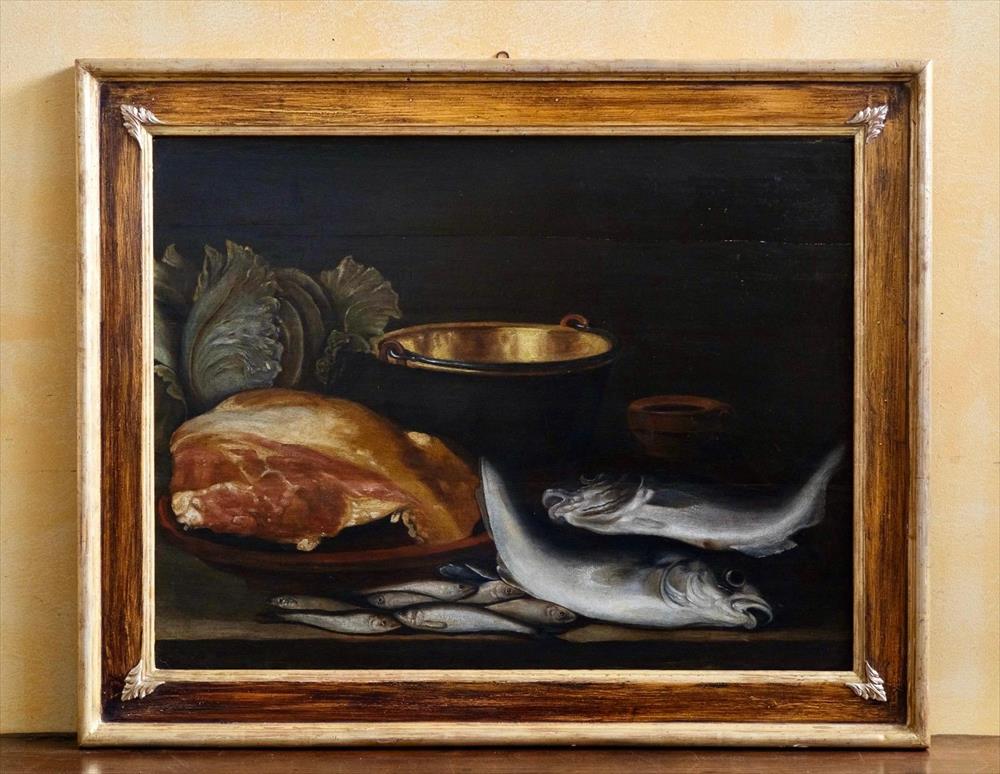
Still Life with Fish and Meat – oil on oak panel, 17th century
Northern European school (Dutch / Flemish), genre painting
This is not a decorative composition.
It is matter.
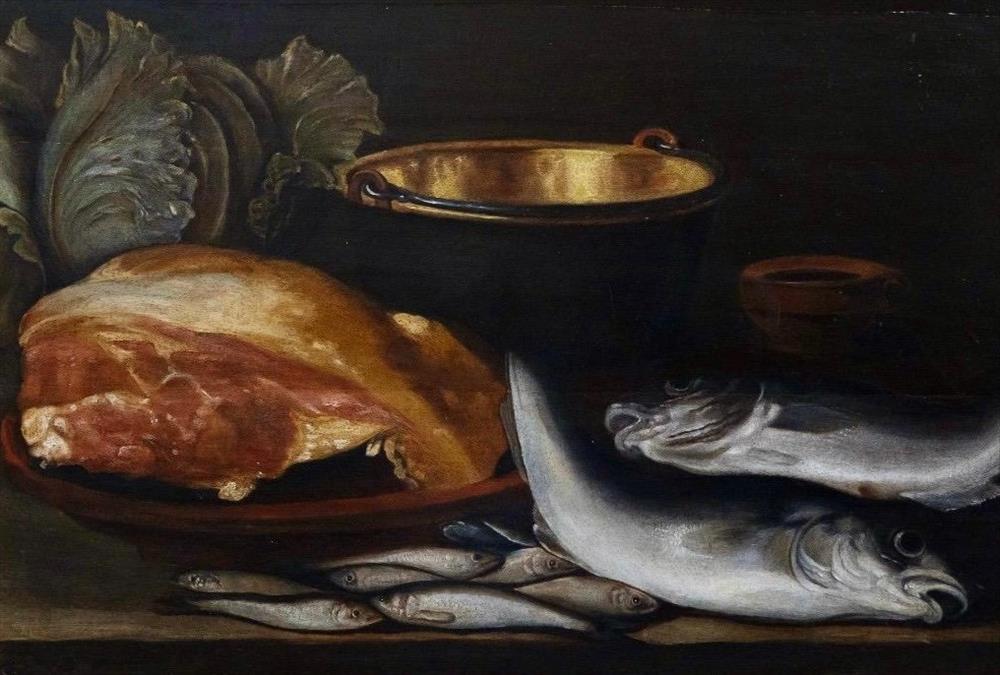
A cut of meat placed on a plate, fish laid across the table, a cabbage, a copper pot.
Simple objects, chosen without display.
The scene does not narrate.
It holds.
The background is dark, compact.
Light enters from the left, touches the surfaces, and stops.
It does not illuminate everything.
It isolates.
That is what defines the painting.
The support is oak panel.
This is not a minor detail.
Compared to canvas, the surface is denser, more compact.
The brushwork holds firmly, and the light sits on the surface without dispersing.
You can see it clearly: the matter is tighter, more controlled, more physical.
The meat has real weight.
The fish reflect a cold, tense light.
The cabbage interrupts the surface with a rougher texture.
The copper does not decorate: it absorbs the light and gives it back as warmth against the dark ground.
There is no excess.
Only presence.
If you look closely, the painting is built on essential contrasts:
warm and cold
glossy and matte
solid and irregular
Everything remains restrained.
From a stylistic point of view, the work belongs to the Northern European still life tradition of the 17th century, particularly within the sphere of genre painting developed in the Dutch and Flemish context, where everyday objects are treated for their physical presence rather than symbolic meaning. The direct handling and subject matter place it close to painters such as Isaac van Duynen and the broader tradition of kitchen still lifes.
This is not a display piece.
It is a kitchen still life.
And that is exactly why it works.
Condition
Readable painted surface with age-consistent wear. Later frame.
Conclusion
This is a painting that does not try to impress.
It builds presence through truth.
The longer you look, the more tangible it becomes.
- Material: Oil on oak panel
- Size: cm 95 x 72
- Condition: Restored
- Period: 17th century
- Style: Baroque
- State: Optimal conditions