it
it
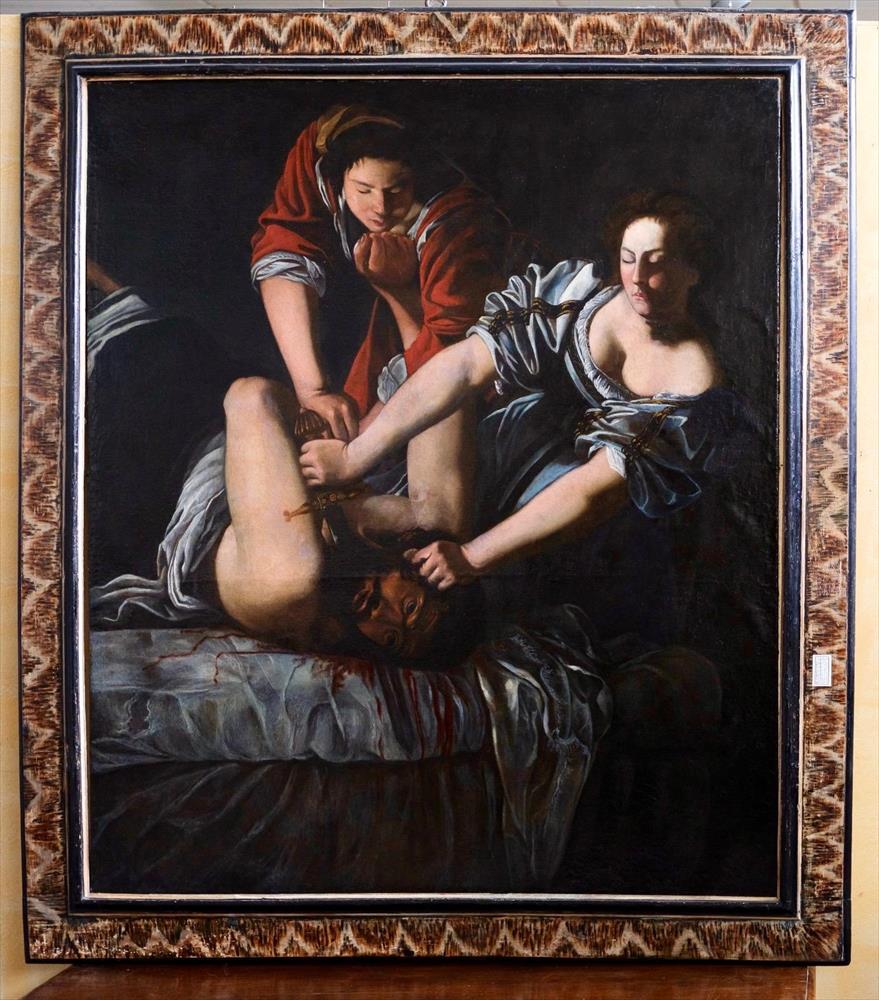
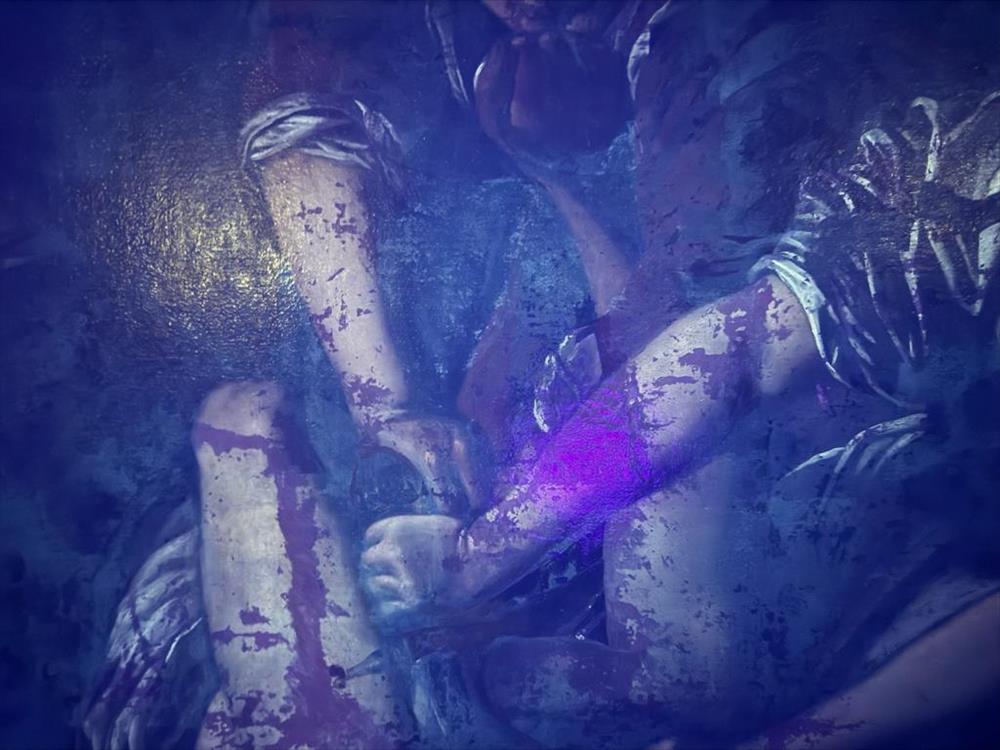
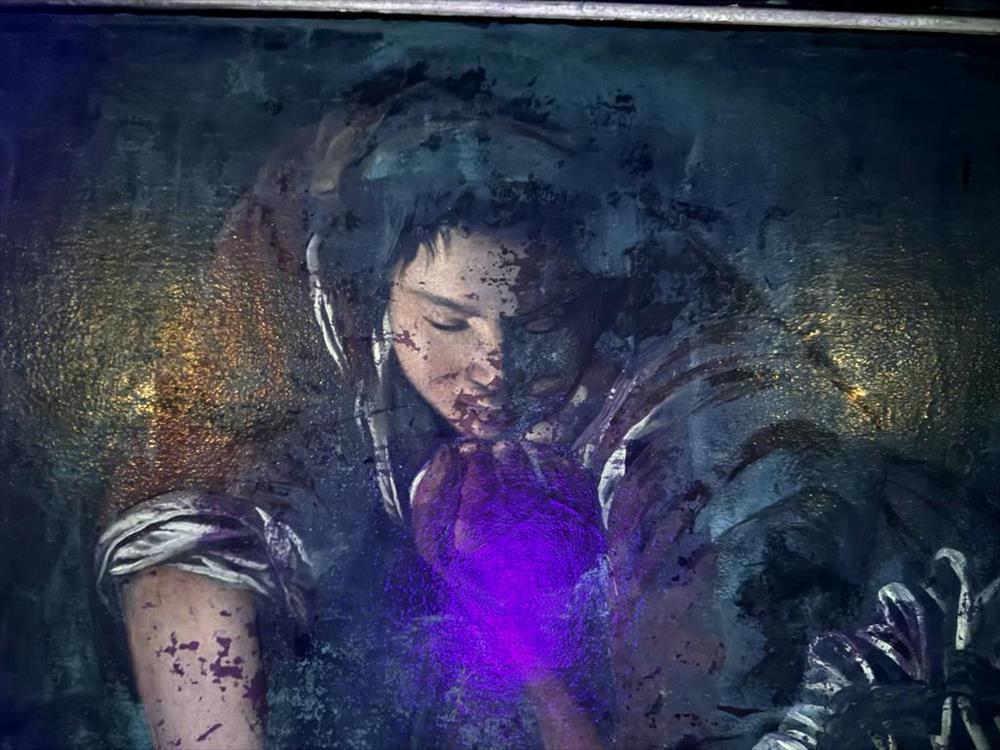
A composition built at close range, with no distance between the viewer and the action.
Three figures, a bed, a moment in progress.
Judith grips Holofernes’ hair with her left hand while holding the sword in her right; the maid stands behind, actively supporting the act. The body of Holofernes occupies the centre of the scene, already marked by blood on the sheets.
The image does not unfold — it holds a single instant.
The subject comes from the Old Testament: Judith, a Jewish widow, enters the tent of the Assyrian general, seduces him, lets him fall asleep, and kills him to save her city.
In the 17th century, this theme became central to Caravaggesque painting, as it allowed artists to focus on physical presence, light, and tension without symbolic mediation.
The scene is reduced to what is necessary: a dark ground, concentrated light, and a confined space.
White sleeves, a deep blue garment, and the red of the blood define the chromatic balance. Everything is arranged to keep attention on the act itself.
The composition is clearly structured around a known model.
The close framing, the positioning of the figures, and the active role of the maid relate directly to the visual tradition established by Artemisia Gentileschi, particularly her well-known version now in Florence. That composition became a reference point for numerous reinterpretations throughout the century.
This painting belongs within that lineage.
Not as a direct attribution, but as a conscious derivation from an established visual structure.
The reported provenance from a Florentine noble residence is consistent with the historical circulation of this subject in that context.
Condition
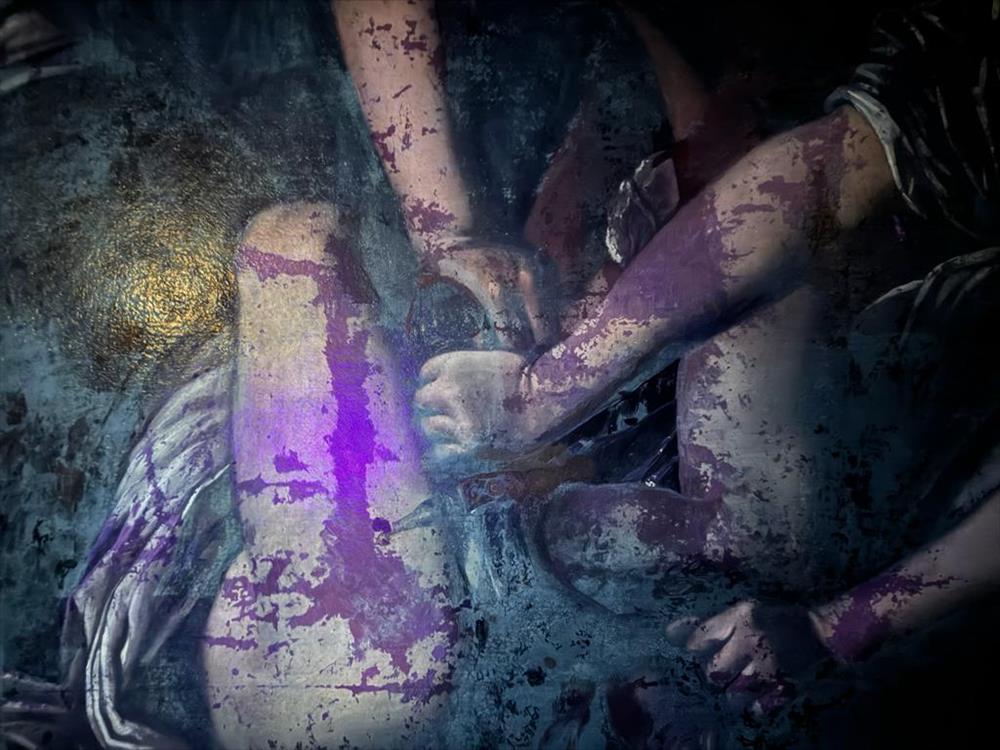
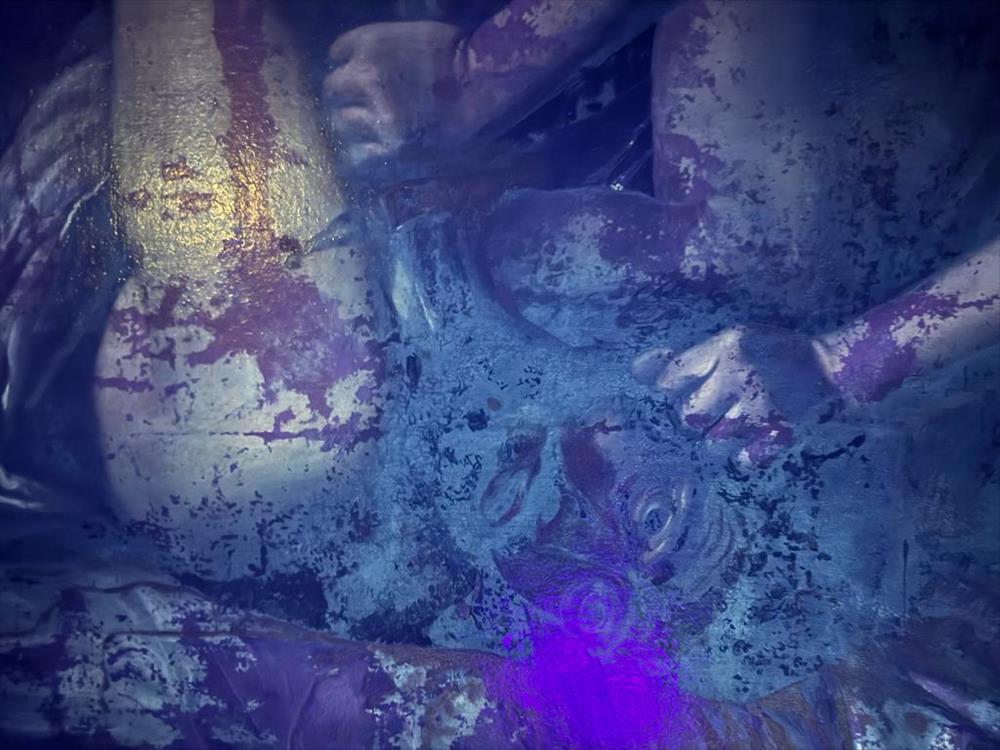
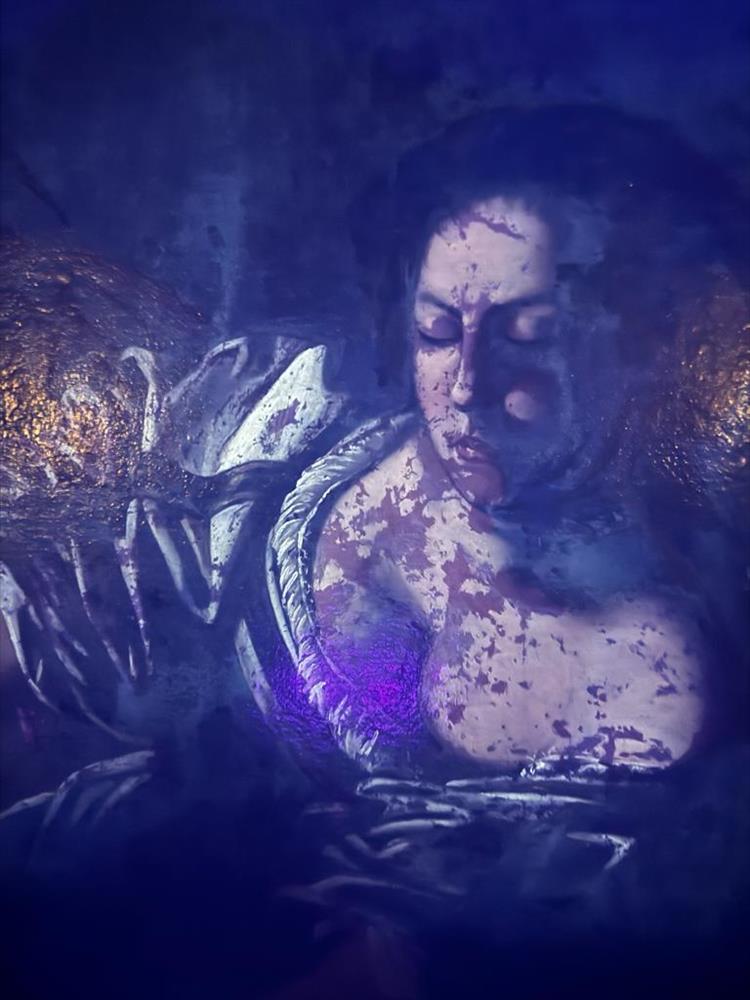
The painted surface shows extensive restoration and overpainting, visible under ultraviolet (Wood’s) light, with areas of loss and later reintegration due to a non-linear conservation history.
The image remains legible in its structure and the composition is intact.
The painting retains its original 17th-century frame, ebonised with a silvered inner border and flame-pattern decoration, consistent with the period.
This is not a work that resolves into a single definition.
It brings together:
a clearly recognisable iconographic model
a level of execution that invites further study
a material history that remains visible on the surface
It is a painting that asks to be examined, rather than simplified.
It brings together three elements:
a subject among the most intense of the 17th century
a composition aligned with high-level models
a condition that still leaves room for investigation
The more it is observed, the more it opens.
- Material: Oil on canvas
- Size: cm 140 x 160
- Condition: Tobe restored
- Period: 17th century
- Style: Baroque
- State: With defects and old restorations