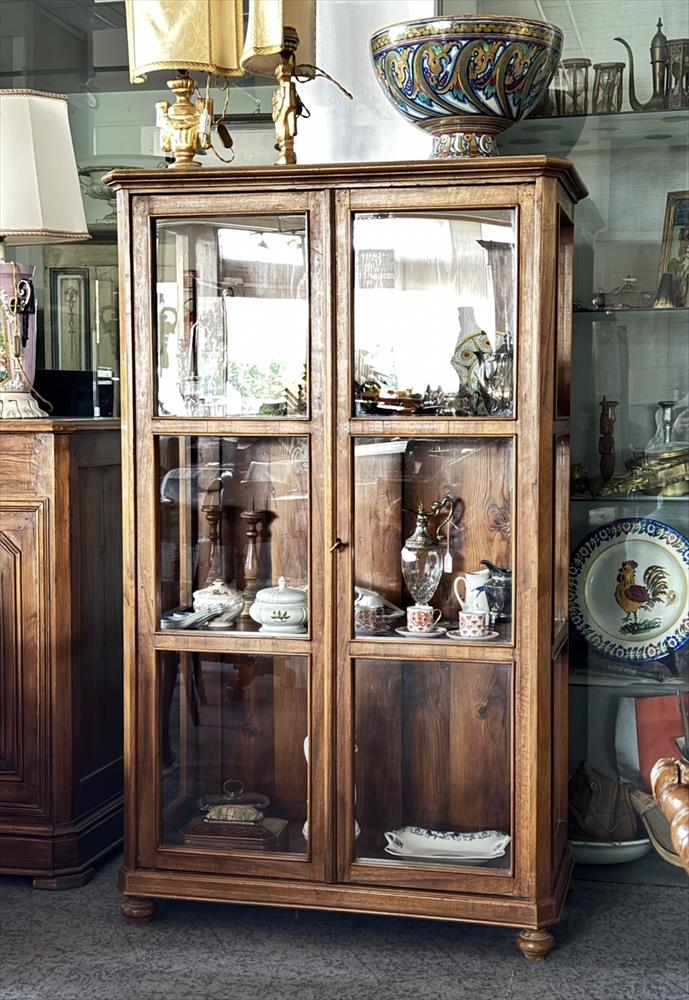
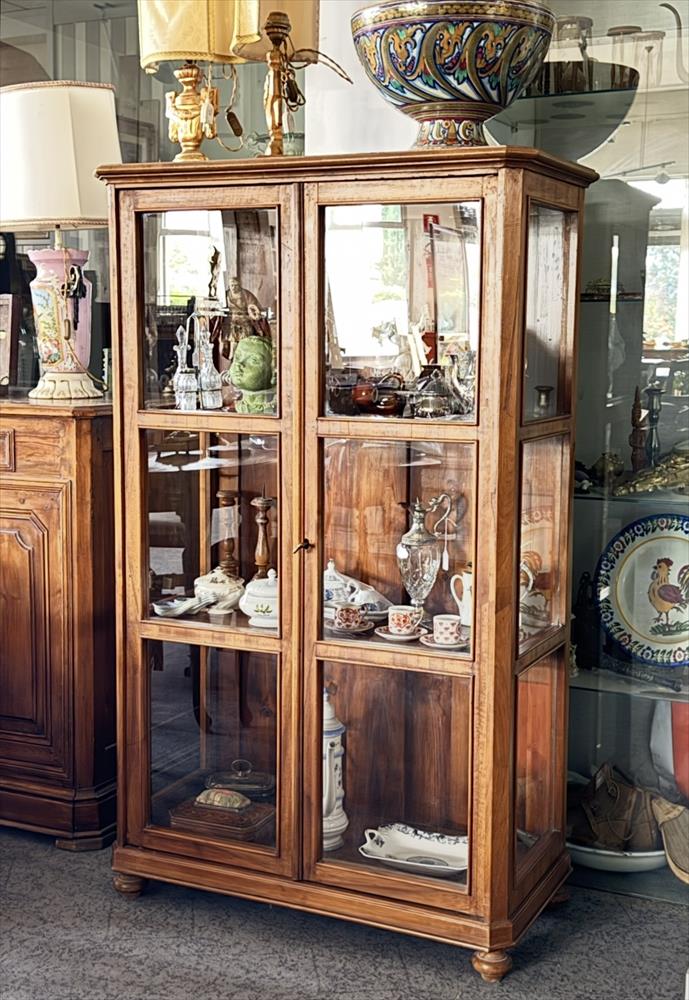
Walnut-Veneered Display Cabinet – Central Italy, Early 19th Century
Walnut-veneered display cabinet, Central Italy, early 19th century. Three-sided glazing. 100 W × 48 D × 161 H cm.
Designed to display treasured household objects without hiding them, this cabinet originally held porcelain, silver, glassware and other carefully chosen pieces—protected, yet always part of the room.
The glazing is not limited to the two front doors but continues along the sides as well. This thoughtful design allows light to pass freely through the cabinet, lets the contents be appreciated from different angles and gives the piece a surprisingly light presence. Slim wooden frames define the glazed surfaces without overpowering them, allowing both the light and the objects themselves to take centre stage. A gently projecting cornice, a moulded base and turned onion feet complete the restrained elegance typical of the early nineteenth century.
What makes this cabinet special is the relationship between glass and walnut. The walnut veneer reveals a beautifully figured grain across the uprights, rails and frames, enhanced by the wood's mellow, honey-toned patina. It is the walnut that brings warmth and depth to a structure that is otherwise almost entirely transparent, preventing it from feeling like a simple display case.
Today it is equally suited to ceramics, books, crystal or a collection assembled over many years, whether placed in a living room, dining room or study. It still performs the task for which it was made: protecting treasured objects without concealing them.
Restrained, yet far from ordinary, its glazing on three sides, elegant proportions and measured use of walnut give it a distinctive presence, even when empty.
 it
it