it
it
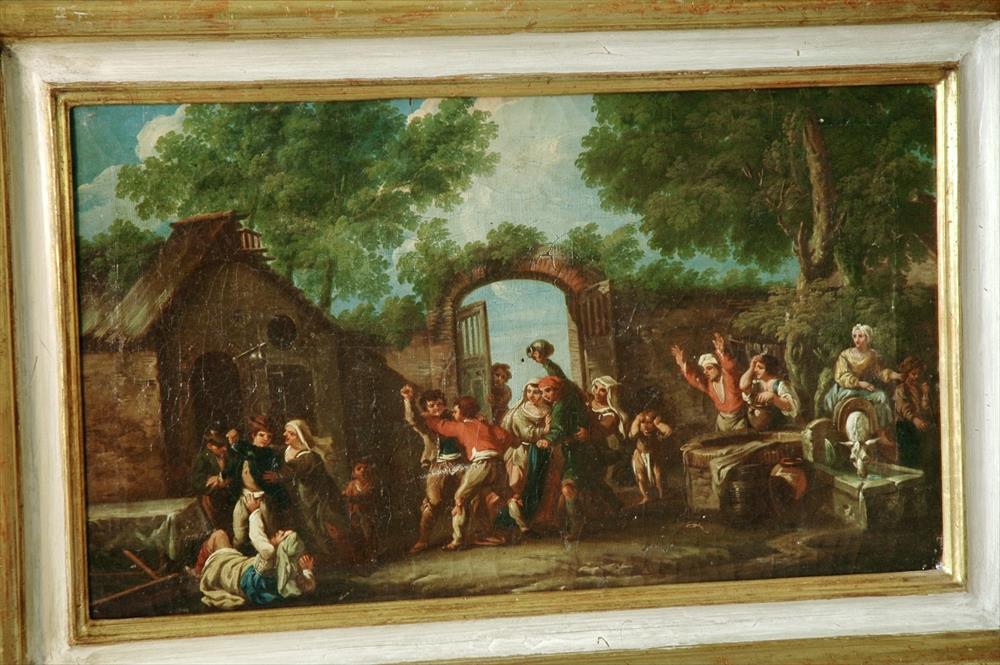
A crowded courtyard, built to contain disorder.
The scene is tightly composed, yet nothing feels static. Figures overlap, react, collide — each one caught in a precise moment of action.
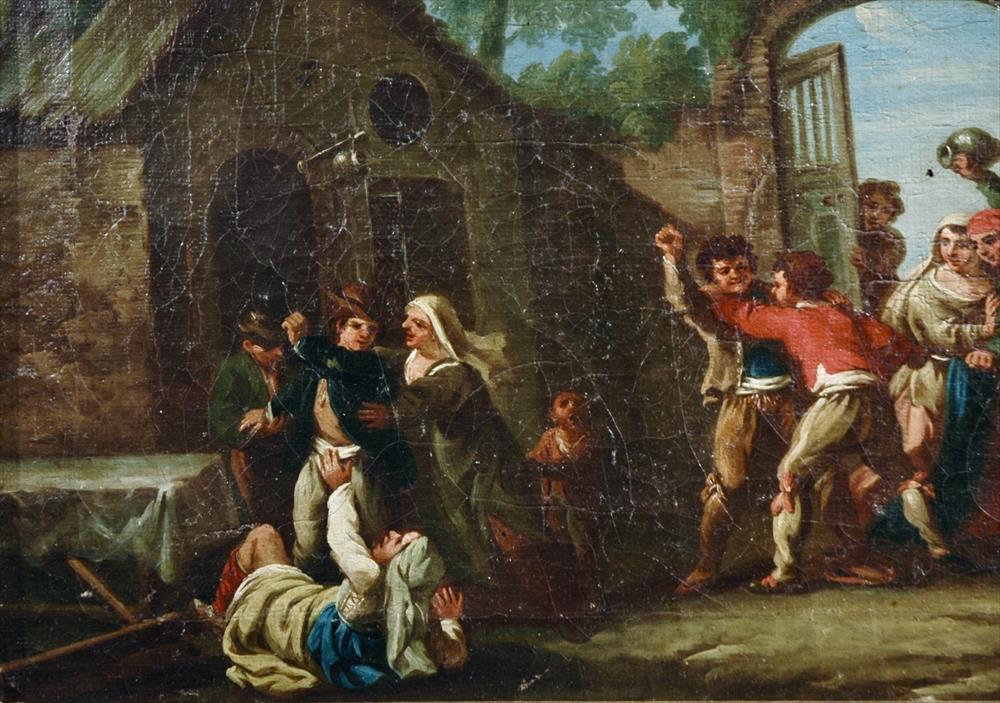
On the left, the conflict is immediate. A man lies on the ground while another stands over him with a raised fist. A woman steps in, trying to break the fight. Just behind them, another group continues the clash.
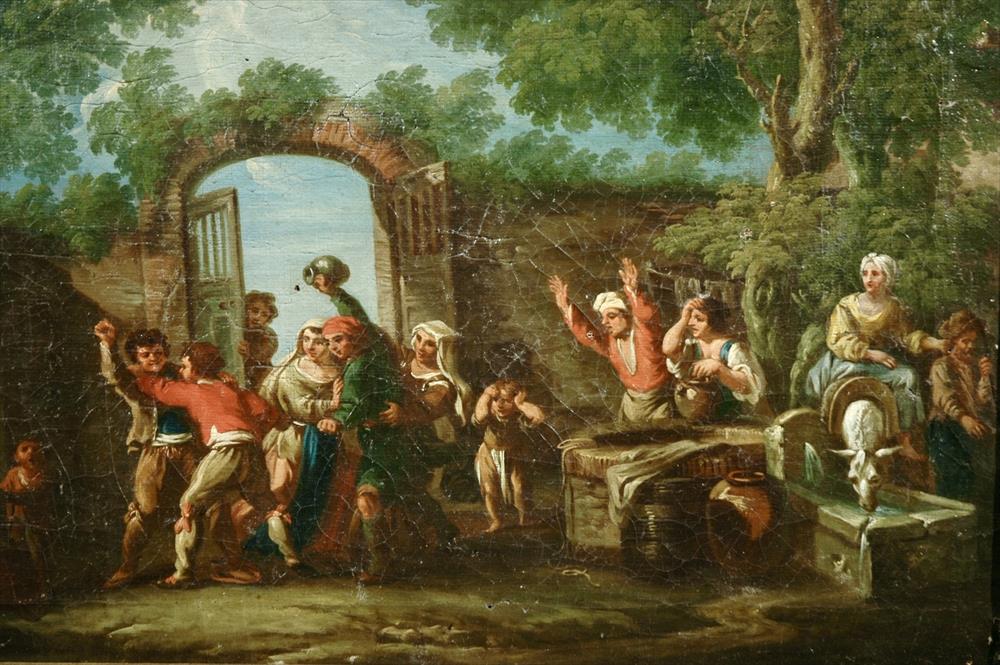
At the center, tension gathers. A man with a red headscarf grips a woman and pulls her into the confusion, while others press in around them.
To the right, the scene shifts. Some watch, others react. One woman raises her arms, another sits apart on a low wall, detached. Beside them, a donkey drinks quietly at the fountain, completely indifferent.
This detail changes the balance.
The animal introduces a stable rhythm within the disorder, making the agitation of the human figures even more evident.
The space is structured, not chaotic.
Rustic buildings and a thatched shelter define the courtyard, while a central archway opens onto the landscape beyond. This passage creates depth and allows the eye to move through the scene rather than stop at the action.
This type of painting is known as a bambocciata.
These are scenes of everyday life — fights, markets, popular gatherings — developed in Rome between the 17th and 18th centuries. They were especially sought after by Grand Tour travellers, who collected them as vivid images of local life.
Within Roman interiors, such works functioned as a counterpoint to official painting: not ideal subjects, but observed episodes, constructed to be read and recognized.
In terms of style and composition, the painting relates to the circle of Paolo Monaldi, one of the key interpreters of this tradition, known for organising complex scenes while maintaining clarity.
The composition is active but controlled.
Figures are arranged in groups, gestures remain distinct, and colour directs the eye: reds and blues emerge from the earthy ground, marking points of tension across the surface.
Oil on canvas.
The surface shows consistent age-related craquelure. Colours remain vivid and well preserved.
Gilt wooden frame, simple and proportionate.
A scene designed to hold attention.
Not for the violence itself, but for the way it is constructed.
- Material: Oil on canvas
- Size: cm 43 × 74 h
- Condition: Restored
- Period: Mid-18th century
- Style: Rococò
- State: Optimal conditions