it
it
Small in scale, but conceived with precision.
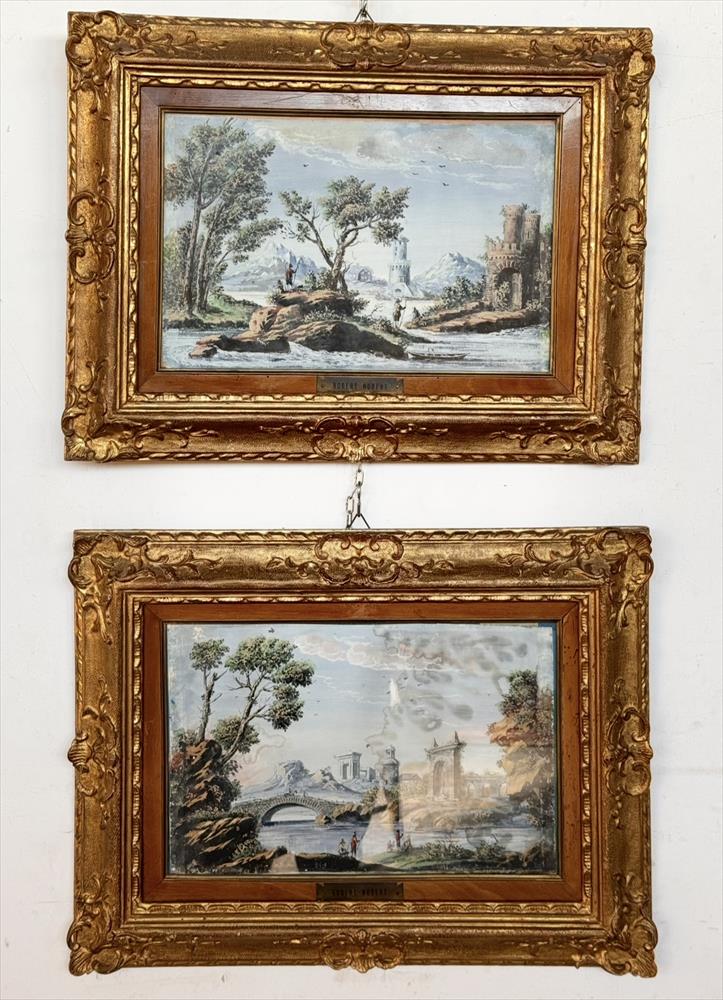
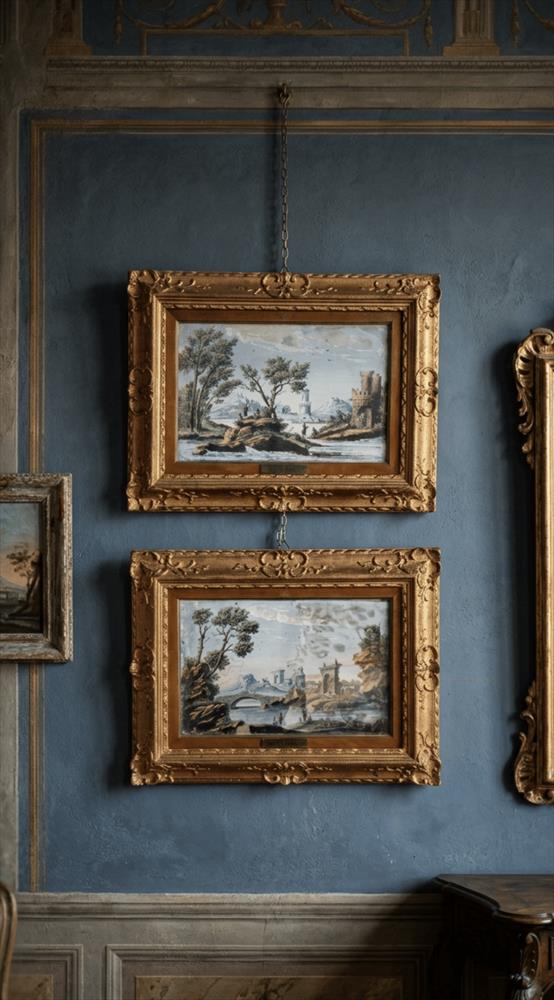
These two gouaches on paper (36 x 23 cm) form a true pair: same hand, same format, and a shared approach to constructing the landscape. They were designed to be viewed at close range, where the quality of execution becomes fully apparent.
Gouache — an opaque water-based technique — allows for a compact and luminous surface. It is particularly suited to fine detail, visible here in the rendering of figures, architecture, and vegetation.
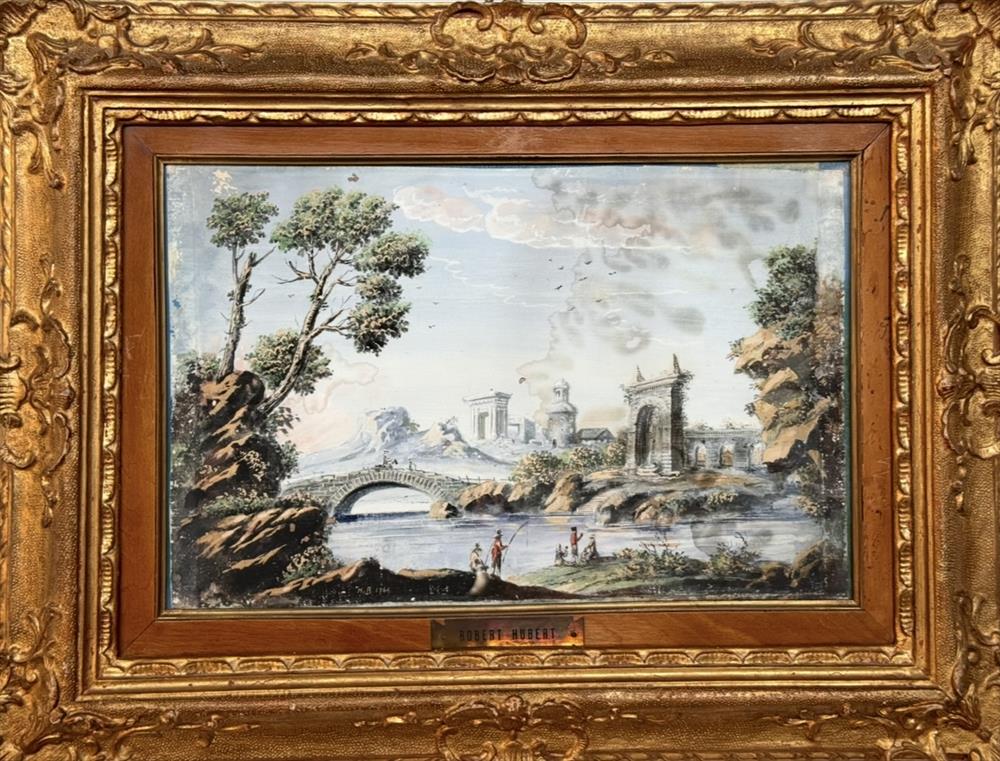
In one composition, a stone arch bridge crosses the river, leading toward a group of classical ruins: a monumental arch, a tower, a staircase, and a colonnaded temple in the distance. Small figures gather along the bank, fishing or pausing.
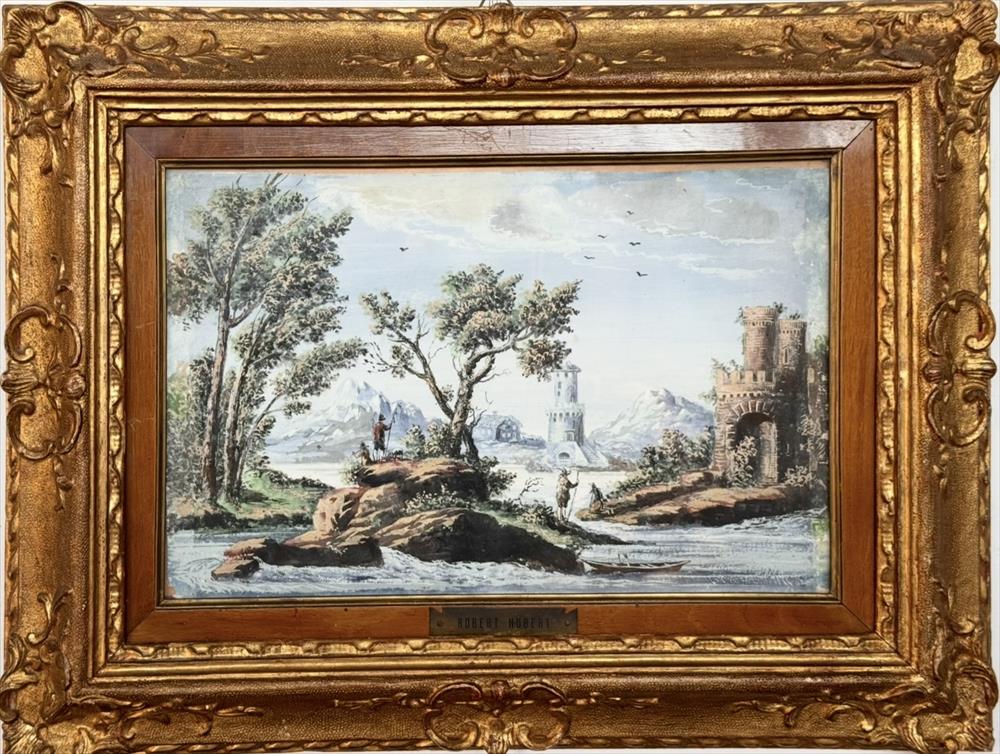
The second scene offers a variation: a rocky island with trees at its center, a cylindrical tower and fortified structure to the right, distant mountains, and a small boat on the water. As in the first, the figures serve to establish scale and guide the eye rather than narrate a specific event.
These are not depictions of real places.
They are constructed landscapes, typical of the 18th century, where classical ruins, medieval architecture, and natural elements coexist within the same invented space. This is a deliberate choice: the painter assembles the scene from ideal components, creating an image that feels coherent without being tied to reality.
This visual language developed in Rome during the Grand Tour. Travelers and collectors sought works like these — images that could encapsulate the idea of Italy: ancient, monumental, and timeless. In this sense, such gouaches function as portable memories of that experience.
The initials H.R. and the date 1764 correspond to the Roman period of Hubert Robert, a painter closely associated with this type of subject. The execution and overall quality, however, place these works within a related milieu, reflecting his influence rather than suggesting a direct attribution.
Good overall condition, with visible signs of age and minor surface abrasions. Cleaning would improve clarity and tonal balance.
Later frames.
A pair intended to work together — not as isolated images, but as a single, balanced visual statement.
- Size: 36 × 23 h cm (54 × 51 cm with frame)
- Condition: Restored
- Period: Seconda metà del '700
- Style: Neoclassical
- State: Good conditions