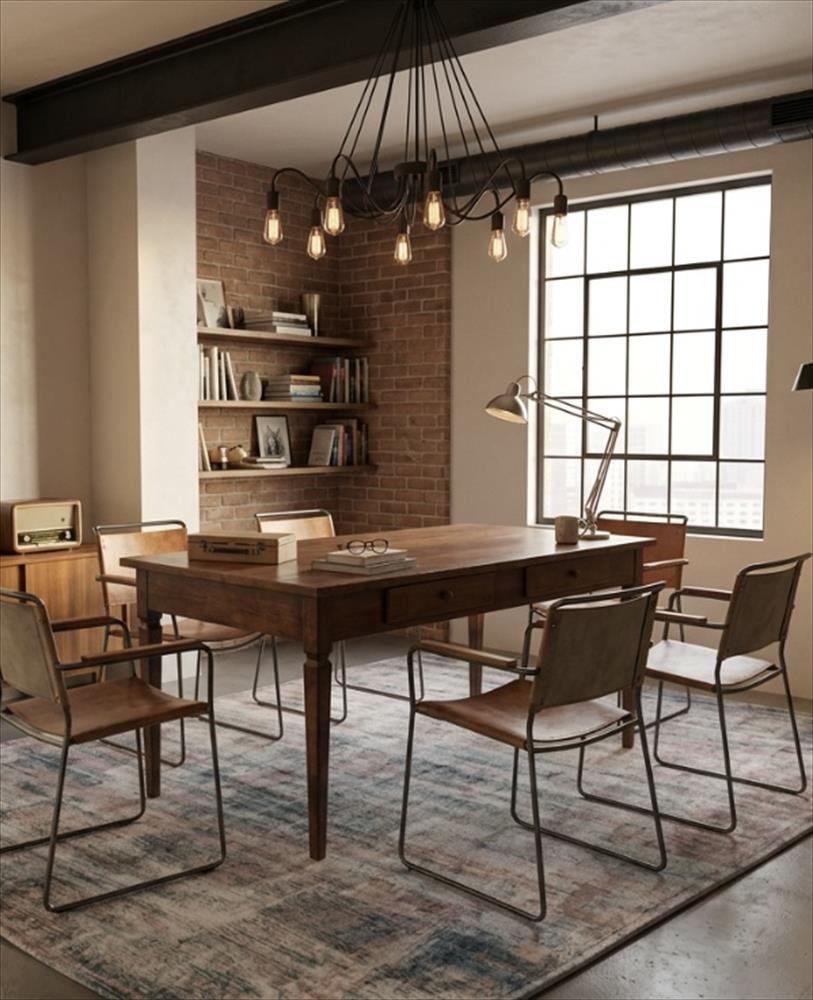
A large solid cherrywood table built for writing, working, dining and living with every day.
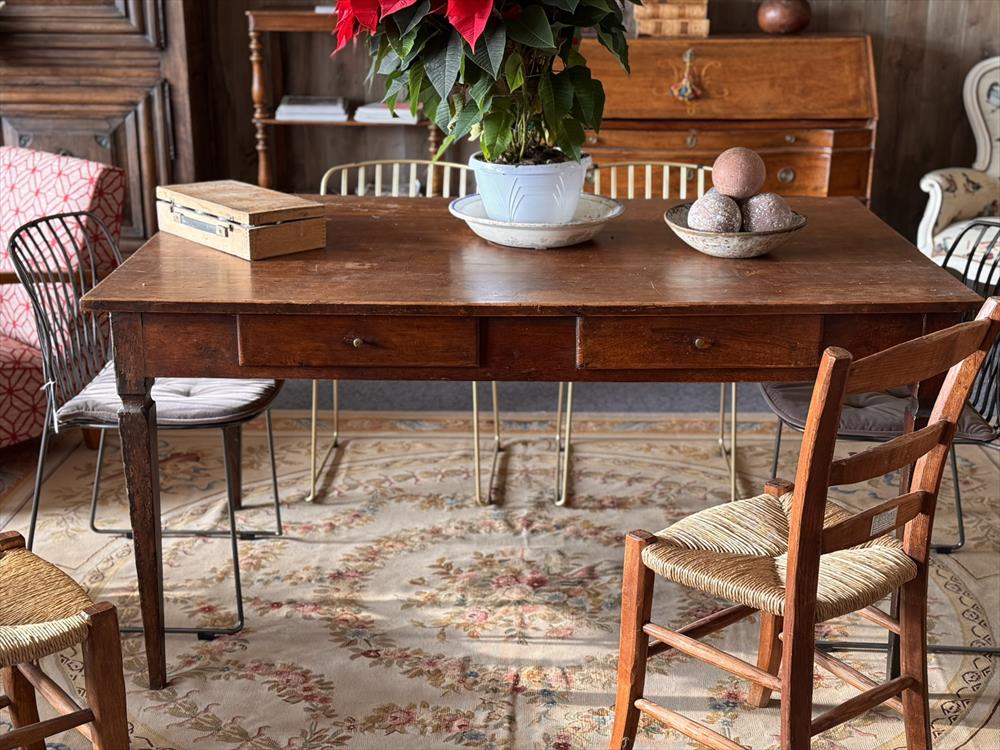
This rectangular solid cherrywood table was made in Central Italy during the second half of the 18th century, in the purest Italian Louis XVI taste.
Its strength is not decoration, but proportion.
The line is clean, balanced and architectural, with slender tapered legs finished by the typical upper narrowing found in late 18th century Italian neoclassical furniture. Elegant, but still practical and grounded.
The first thing that stands out is the surface.
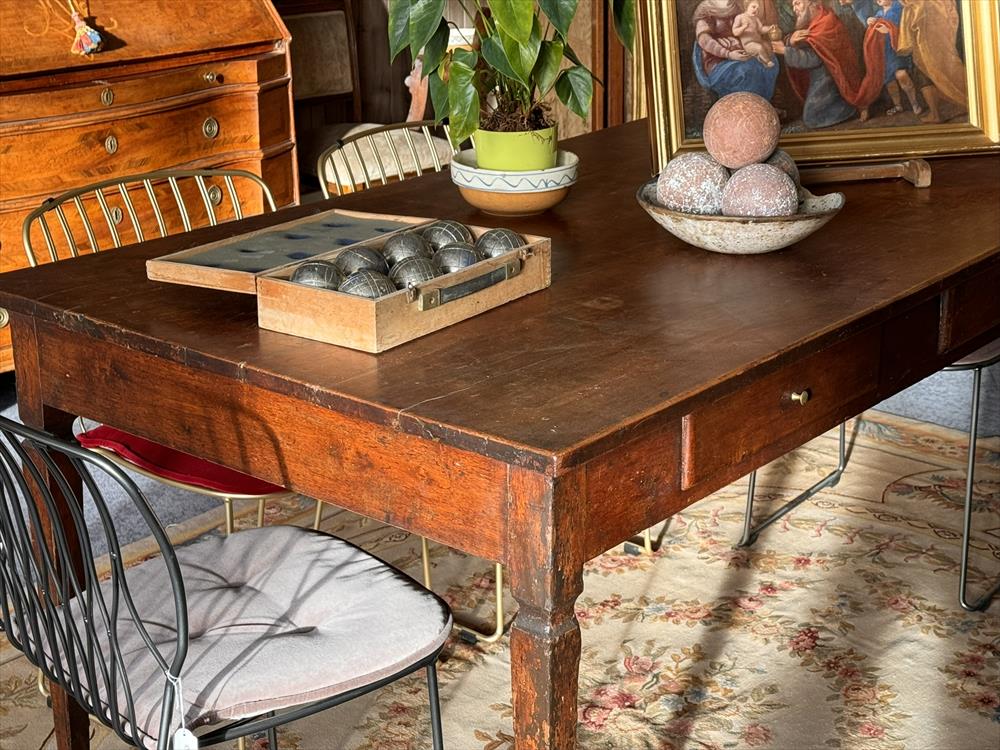
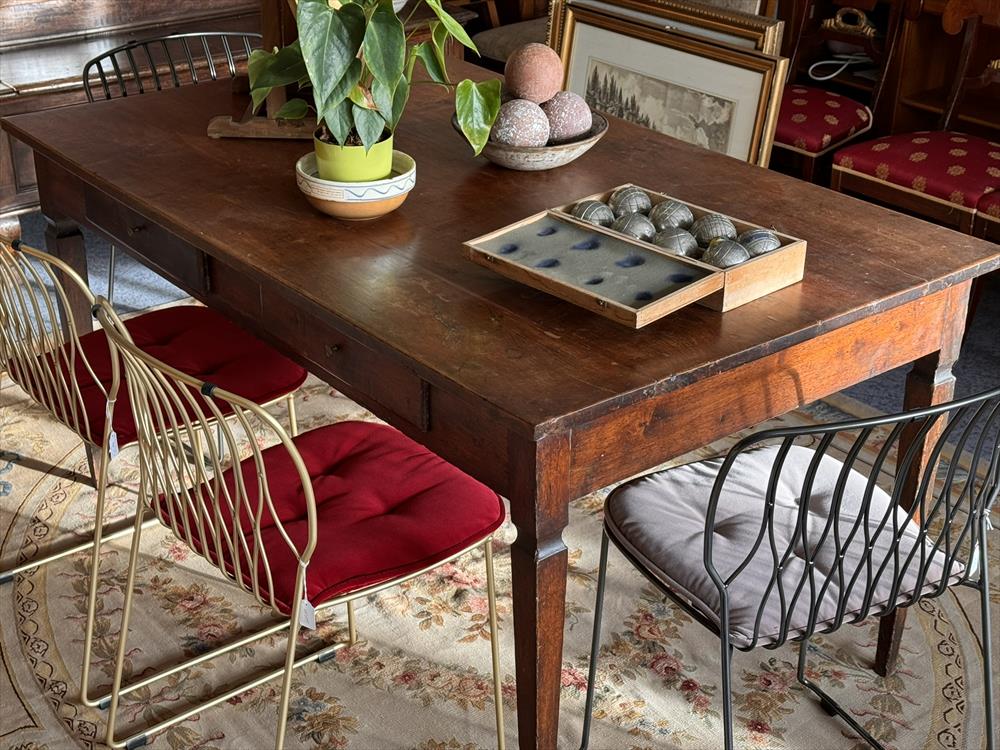
The cherrywood has developed a deep, warm patina over centuries of real use. Scratches, oxidized areas, softened edges and marks left by hands and objects are all still there. Nothing theatrical, nothing artificially aged. Just the natural surface of a table that has truly lived.
The structure is entirely original.
Solid wood frame, traditional joinery, hand-built drawers and original wooden runners: the kind of construction typical of pre-industrial workshops, made to survive generations rather than fashions.
One of the most unusual features is the presence of four drawers, two on each long side.
This immediately tells you the table was never intended as a simple dining piece. It was a true central household table: used for writing, reading, bookkeeping, correspondence and everyday work, as much as for meals and conversation.
The proportions are particularly successful.
At 160 cm long, it works comfortably as a dining table for six, but it also functions beautifully as a large writing table, shared workspace or studio table. The slender Louis XVI legs leave generous room underneath, making it practical even by contemporary standards.
This is the kind of furniture that belonged to the educated bourgeoisie of late 18th century Central Italy: not aristocratic display furniture, but something arguably more interesting. A serious domestic object, commissioned from a skilled workshop by people who valued durability, proportion and the culture of the home.
The cherrywood itself plays a major role in its character.
Unlike walnut, which can feel darker and more formal, cherrywood brings warmth and light into a room. Over time it develops a softer, more human surface — one of the reasons antique cherrywood pieces continue to work so naturally in contemporary interiors.
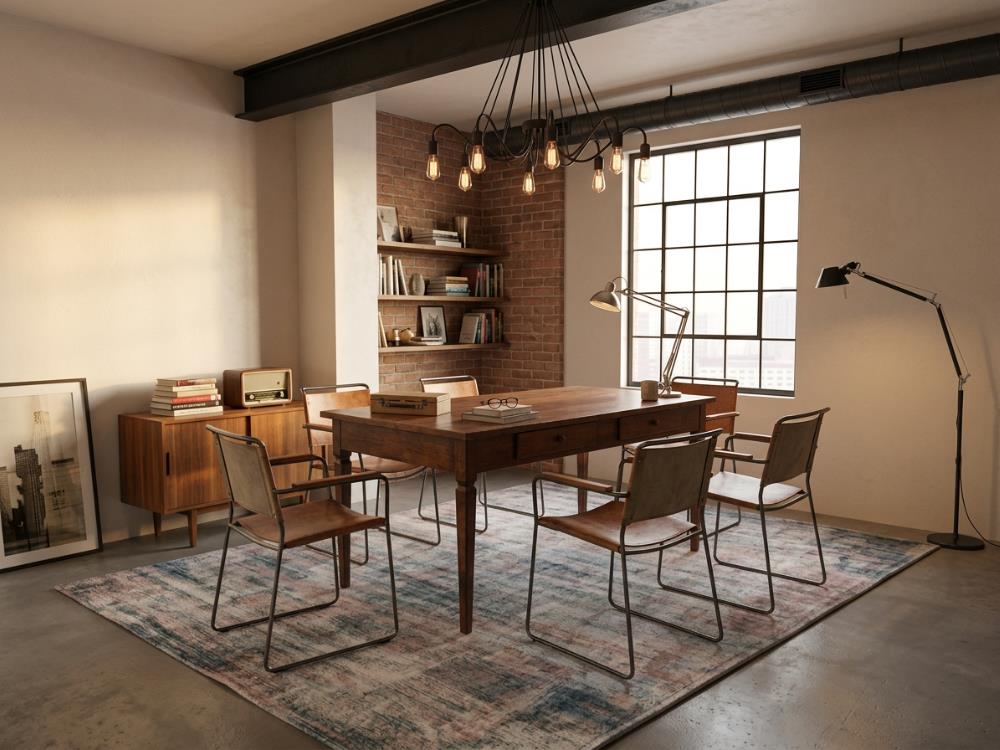
Today this table fits almost anywhere: dining room, study, library, kitchen or open living space.
It does not overwhelm the room or impose a rigid historical atmosphere. Instead, it brings real material, honest wear, warmth and quiet authority.
It is one of those pieces that becomes more convincing the longer you live with it — because it was built properly from the beginning, and because it never tried to be anything other than what it is.
These objects survived time by earning the right to remain.
They carry memory and truth with them.
Our work is to recognize them and help them continue their journey.
 it
it